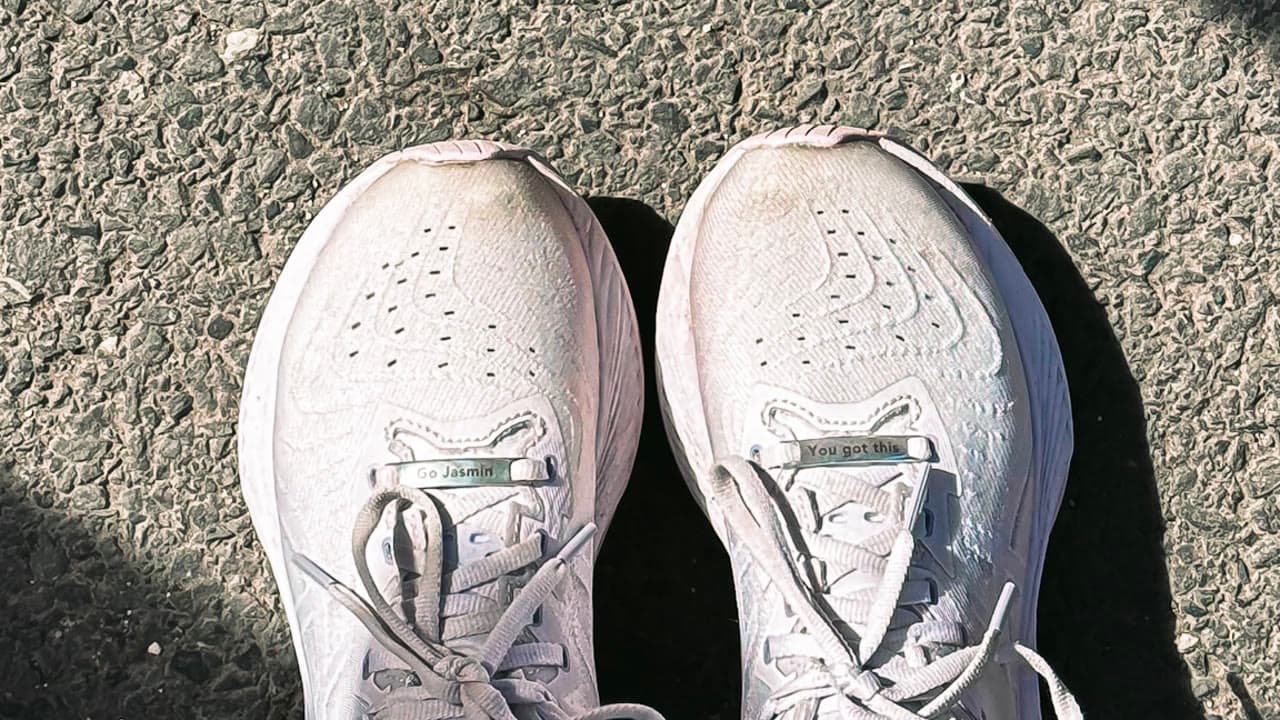
"Showing up is the hardest part, and here you are—you did it."
That line gets me every time.
A few years ago, when I was interviewing for design jobs, I was asked a question that has stuck with me ever since: what app do you enjoy using, and why?
My answer was Nike Run Club.
The quote above is something you hear during one of their guided runs, and it's exactly what I needed when I first started running.
Showing up consistently isn't easy. I've fallen off the running train more times than I'd like to admit. Sometimes life gets busy, sometimes I lose motivation, and sometimes the thought of putting on my running shoes feels harder than the actual run itself. But something about that one sentence makes me want to lace up and keep going.
Over the past few years, I've tried my fair share of running apps. Strava didn't really click with me, and I found the social features got old quite quickly. Any Distance was promising until it suddenly disappeared. Runna is a great product, but the structure and training plans felt a little too rigid for the way I like to run.
Nike Run Club, though, nailed it for me.
The app felt easy to pick up and understand from the first tap. It didn't overwhelm me with screens or features; it gave me what I needed to run and track my progress. The Apple Watch integration was seamless too. Mid-run, I could switch what I wanted to focus on without breaking stride, whether that was my heart rate on a recovery day or my pace during a longer run.
But more importantly, it didn't make me feel guilty when I disappeared for a while.
It wasn't about chasing streaks or competing on leaderboards. If I missed a day, a week, or even longer, I could come back and simply start again.
And I think that's why that one sentence has always stuck with me.
Nike Run Club seemed to understand that sometimes the hardest part of running isn't the run itself.
It's showing up.
The other apps weren't bad. They just weren't what I needed.
And that's an important distinction.
Strava isn't a bad product because I didn't connect with the social side. For someone who loves sharing their runs, competing with friends and feeling part of a wider community, those features might be exactly what makes the app valuable.
Runna isn't bad because I found it too structured. Someone training for their first marathon or working towards a specific goal might find that structure incredibly helpful.
We could all describe ourselves as runners, but that doesn't mean we all need the same thing from a running app.
One person might be training for a marathon. Another might be chasing a personal best. Someone else might run to clear their head after work, while another person is trying to get back into exercise after a long break.
And then there's me, who sometimes needs this little voice to tell me that I'm doing great.
The activity is the same. The people behind it are not.
Which is exactly why understanding who we're designing for matters so much.
"People who run" isn't enough
It's easy to describe users by what they do.
People who run.
People who travel.
Designers.
Those labels give us a starting point, but they don't tell us very much about the person behind them.
They don't tell us why someone is doing something, what motivates them, what gets in their way or what success looks like to them.
Two people can use the exact same product in completely different ways because they're trying to achieve completely different things. Understanding that difference can completely change the experience we design.
This is where I think personas can become much more useful than the familiar profile we sometimes create at the beginning of a project. The most interesting parts aren't necessarily someone's age, job title or favourite coffee order. They're the behaviours, motivations and context that help us understand why they might use a product in the first place.
What are they trying to achieve? What motivates them? What gets in their way? What frustrates them? What does success look like to them?
Those are the things that can help us move from designing around a category of user to designing for an actual person.
A good idea can still be the wrong idea for your users
This is something I think about whenever a new feature or idea comes into a project.
Sometimes an idea is genuinely great. But being a good idea isn't quite the same thing as being the right idea for the people we're designing for.
A feature that one group of users loves could make another group's experience more complicated. Something that motivates one person could make someone else feel overwhelmed. Adding more functionality might make a product more powerful, but it could also take away from the simplicity that made people enjoy using it in the first place.
That's why I think personas should give us something to come back to throughout the design process. Not as a set of rules telling us what we can and can't build, but as a way to keep the people we're designing for present in the conversation.
When we're deciding what to prioritise, simplifying a flow or debating whether another feature is necessary, it's useful to have that context to refer back to. Who would this help? What problem does it solve? Would it improve the experience for the people we're building for, or are we making assumptions about what they need?
Personas shouldn't be a checkbox exercise that happens at the beginning of a project and then disappears into a research deck. They should be useful reference points that help us make decisions throughout the process.
That doesn't mean they should limit where a product can go, either. Products evolve, strategies change and sometimes we deliberately want to reach a new audience. Personas aren't there to stop us from changing direction. They're there to help us recognise when we are changing direction and make sure we're doing it intentionally.
The problem isn't deviating from a persona.
It's accidentally changing direction without realising it.
Designing for a runner vs designing for a person
Nike Run Club probably isn't objectively the best running app out there. For me, though, it's the one that works.
Because it understands something beyond the fact that I run. Sometimes I want to improve. Sometimes I want to push myself. And sometimes I just need a little voice to remind me that showing up was enough.
For someone else, that might not be enough. They might want competition, structure, social features or detailed performance data.
And that's exactly the point.
My favourite thing about Nike Run Club isn't that it designed an app for runners.
It's that, somewhere in the experience, it feels like it designed for me.
"Showing up is the hardest part, and here you are—you did it."
The person, not the persona.